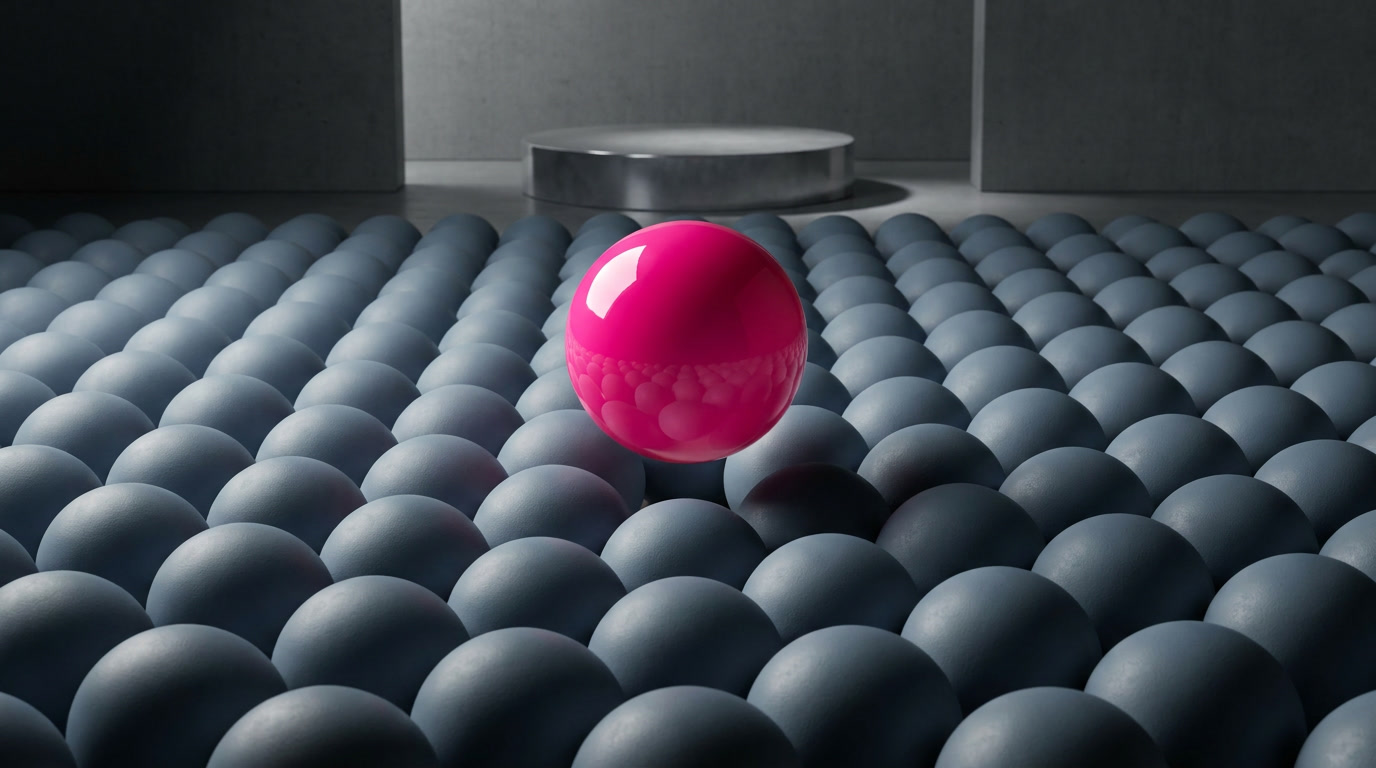
People imagine this job as a series of glamorous reveals. A dramatic curtain drop, a founder tearing up, a logo rotating slowly on a screen while somebody says "wow."
That happens perhaps four times a year. The rest of it is arguing about a single word for forty minutes and then changing it back.
I want to show you the unglamorous version, because I think founders make better decisions when they understand what they are actually buying. You are not buying a reveal. You are buying a lot of structured arguing by people who care too much.
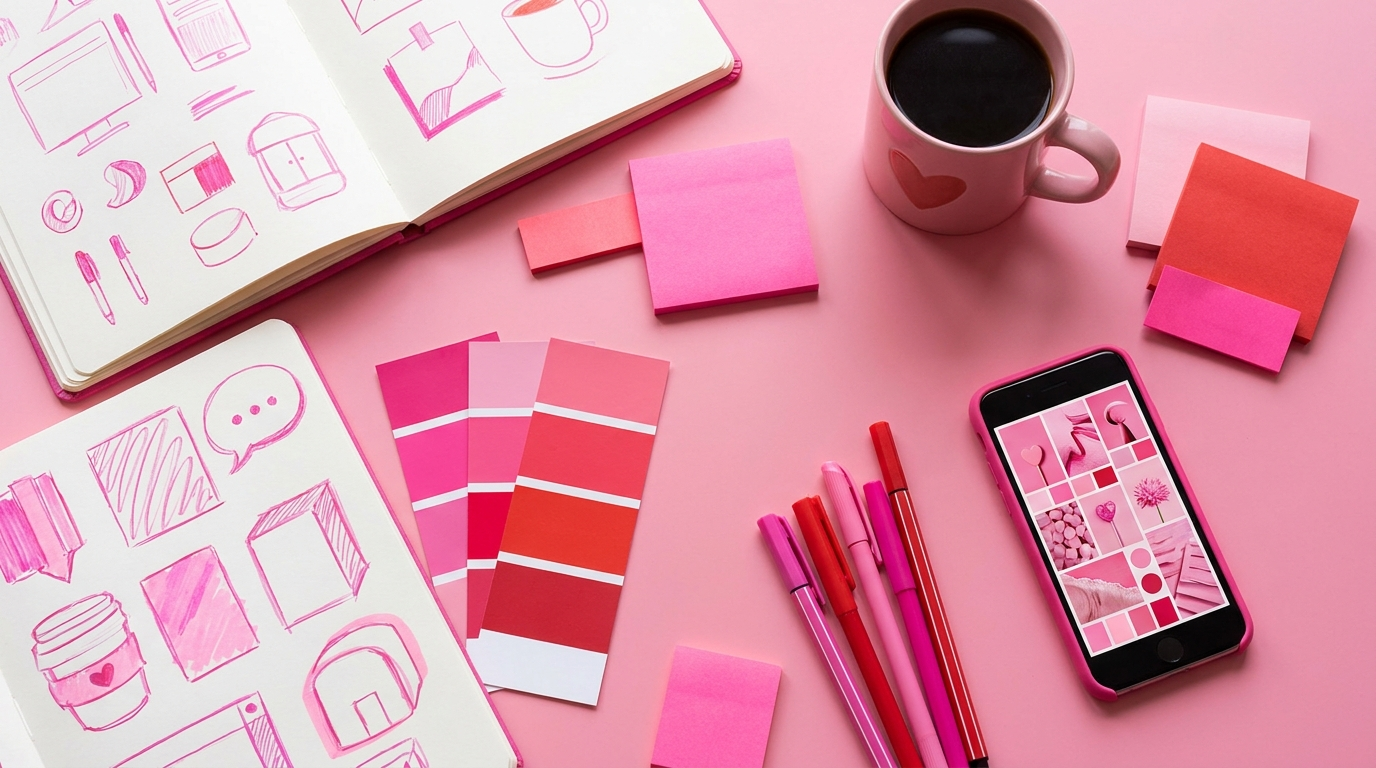
7:40 a.m. The list before the noise
I write tomorrow's three priorities the night before, which means the morning starts with somebody else's decisions already made. Past Brea is more disciplined than present Brea and I have learned to just do what she says.
Three. Not ten. If everything is a priority then the day gets spent on whatever shouts loudest, which is almost always email, which is almost never the work that moves a brand forward. The first hour goes to whichever of the three requires actual thinking, because thinking has a shelf life and it expires around two in the afternoon.
Espresso one. We are counting.
9:00 a.m. Strategy, which mostly looks like interrogation
The first block of most days is a strategy session with a client, and I have to warn people in advance that it will not feel like a design meeting. There is no moodboard. There is a document and a lot of uncomfortable questions.
What does a customer do right now instead of buying from you. Who have you lost a deal to and what did they say. If you disappeared tomorrow, what would your best customer miss specifically. What do you believe about this industry that would make a competitor roll their eyes.
That last one is my favorite, because the eye-roll is the signal. If nobody in your category would object to your position, you have not taken one. Founders often arrive expecting to talk about color and leave having said something true out loud for the first time. Several have cried. One rebooked the session because she needed to go think.
This is the most valuable hour of the entire engagement and it produces no visible deliverable whatsoever, which is why so many brands skip it.
11:00 a.m. The sticky-note wall
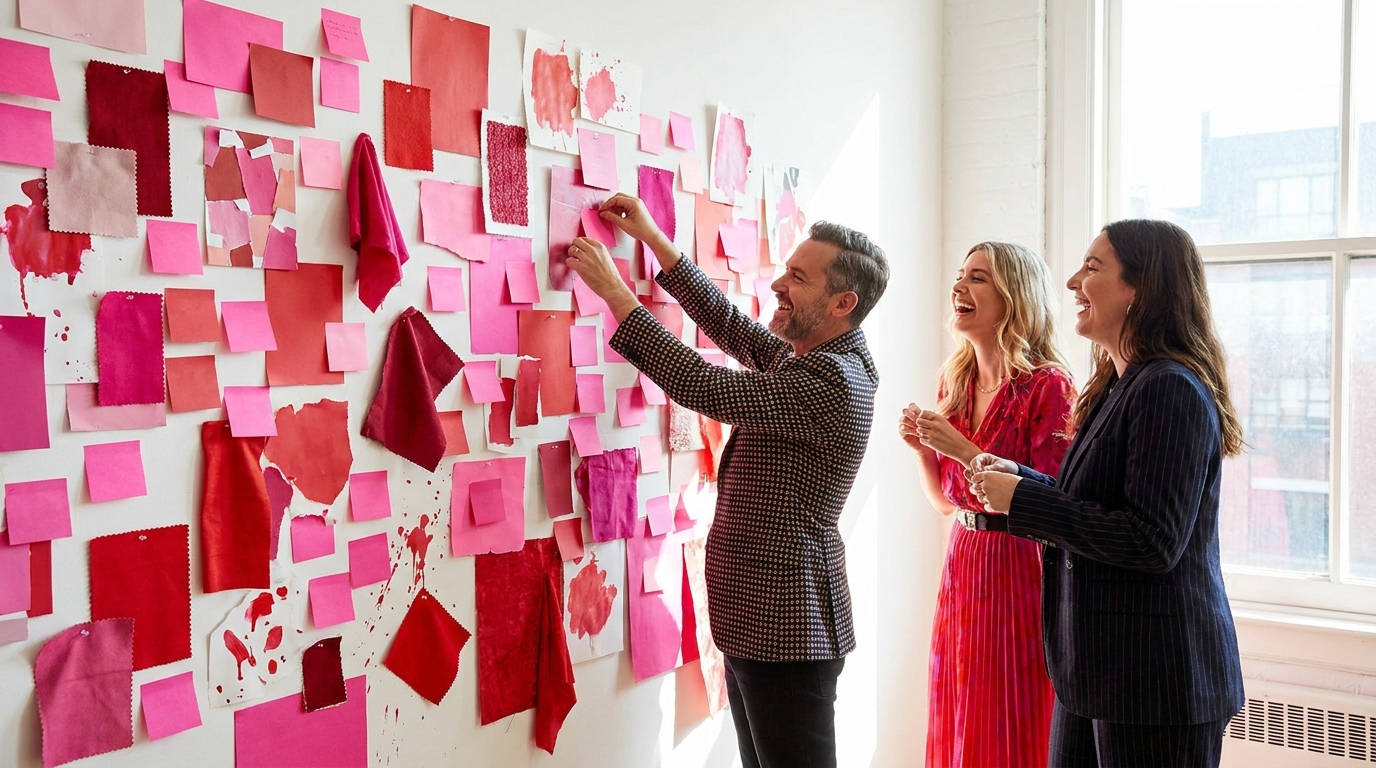
There is a wall. It is covered in pink and red squares in an order that makes sense to approximately one person, and that person is me, and only on alternate Tuesdays.
Every project lives on it in four columns: what we know, what we assume, what we have decided, and what we are avoiding. The last column is the important one. Every brand project has a question nobody wants to answer, usually about price, audience, or the founder's own role in the business. Writing it on the wall in a color you cannot ignore is a cheap trick and it works every time.
Digital tools are better at almost everything except this. Something about standing up, physically moving an idea, and watching a whole team look at the same square of paper does work that a shared document cannot. I have tried to give up the wall three times. The wall has won three times.
12:30 p.m. Lunch, allegedly
Lunch is a genuine institutional weakness here. It is often eaten standing up, over a keyboard, while looking at something that could easily have waited. I am not going to pretend this is a charming quirk. It is a bad habit and I am working on it with the enthusiasm of someone who is not really working on it.
What has actually helped is the walk. Twenty minutes, no phone, usually right when a decision has stalled. An absurd proportion of the naming solutions and headline breakthroughs in this studio have arrived somewhere in the third block of a walk around the neighborhood. The brain solves things when you stop staring at them. This is not mysticism, it is just how attention works, and building a working day that ignores it is a choice to be worse at your job.

2:00 p.m. Making, with the volume up
Afternoons are for craft. Type, layout, color, motion, the actual building. This is the block that gets protected most fiercely, because it is the one that shatters if you drop a meeting into the middle of it.
The playlist is a war crime. It is disco, then nineties R and B, then, without warning or apology, a stretch of film scores when something needs real concentration. Guests have described the transition as "jarring." Guests are welcome to work elsewhere.
Here is the part that surprises people about craft time: most of it is deletion. A first round produces forty directions. The work is not making the forty, it is having the nerve to throw out thirty-seven, including two you personally love. Taste is mostly editing. The ability to kill your own good idea because it is not the right idea is the single skill that separates a brand that holds together from a brand that is a collection of nice things.
4:00 p.m. The honesty hour
Late afternoon is when feedback happens, in both directions.
Giving it, the rule here is simple: no opinion without a reason attached to the strategy. "I do not like it" is not feedback, it is weather. "This reads premium and we agreed we are accessible" is feedback, and it can be acted on. We hold ourselves to that standard internally so we can ask clients for it without hypocrisy.
Receiving it is the harder half. When a client pushes back, the instinct is to defend, and the instinct is wrong. The useful question is always what is underneath the objection. "Can we try a different pink" almost never means the pink is wrong. It usually means they are nervous about how their industry will react, and that fear is a real thing to address, just not with a color picker.
Strategy before pixels. If we cannot say why, we do not get to make it.
Show the work, not just the answer. A reveal with no reasoning is a magic trick, and magic tricks do not survive a board meeting without the magician in the room.
Bland is banned. If a round comes back safe, we do it again. Being tired is not a strategy.
6:00 p.m. The three-line handoff
The day ends the way it began, with a list. Three lines for tomorrow, plus one note about anything that felt off. Not a task, a feeling. "The Sunniez headline is technically correct and has no pulse." Those notes are frequently the most valuable thing I write all day, because a technically correct brand with no pulse is exactly what you get when nobody is allowed to say the quiet part.
Espresso count: four. It was a naming day. We do not talk about naming days.
An ordinary Wednesday
The day, unglamorously
This is what you are actually buying when you hire a brand studio.
- 7:40 a.m.Three priorities, written the night before. Past Brea is more disciplined.
- 9:00 a.m.Strategy session. No moodboard. A document and uncomfortable questions.
- 11:00 a.m.The sticky-note wall. Know, assume, decided, avoiding.
- 12:30 p.m.Lunch, allegedly. Then the walk that solves what staring could not.
- 2:00 p.m.Craft, volume up. Forty directions made, thirty-seven killed.
- 4:00 p.m.The honesty hour. No opinion without a reason attached to strategy.
- 6:00 p.m.Three lines for tomorrow, plus one note about anything that felt off.
The people question
A thing I get asked constantly: how big is the House.
Deliberately small, and deliberately assembled per project. There is a core, and then there are collaborators I have worked with for years who get pulled in when a job needs them. A packaging specialist. A motion designer. A copywriter who is better than me at product names and knows it. A photographer whose eye I trust more than my own on a set.
I am picky about who joins a project and unapologetic about the fact that the rooms I build are mostly women, mostly people who came into this work from somewhere other than a straight design-school pipeline. Not as a statement. Because the work is better. A room where everyone has consumed the same references produces the same ideas, and I have sat in enough of those rooms to know exactly what they output. If your entire creative team is drawing from an identical well, your brand is going to taste like everyone else's.
The other reason is simpler. Most of the brands we build are trying to reach people who have historically been an afterthought in how products get designed and marketed to. It helps enormously to have those people in the room while decisions get made rather than in a focus group afterward.

By the numbers
The math of a studio day
Taste is mostly editing. These are the ratios that produce it.
Why any of this matters to you
If you are hiring an agency, or building your brand yourself, take one thing from this: the glamour is not where the value is. The value is in the interrogation, the deletion, the wall, the argument about one word.
When you are choosing who to work with, ask what their process looks like at eleven in the morning on an ordinary Wednesday. If the answer is all reveals and no arguing, you are buying decoration. If they tell you about the uncomfortable questions and the thirty-seven directions they threw away, you are buying a brand.
And if you are doing it alone, steal the wall. Four columns. Especially the last one.
See you on the walk.
Brea
Free · 15-minute brand audit
The Icon Factor™
See how your brand scores across 5 pillars, and exactly what’s keeping you from standing out.
Grab Your Free Audit →Come see the House
- Want us in your corner? Meet the agency.
- Want the process, in thirty days, with you at the wheel? Brand Camp.
- Daily chaos lives on Instagram.